Short answer
For an active leak, shut off the main water valve and call (613) 449-1758 at any hour. For a slow leak you can't find, check your water meter with every tap off: if it's still moving, water is escaping somewhere. Shea Plumbing finds and repairs leaks, replaces damaged pipe, and insulates lines at risk of freezing.
Signs of a hidden leak
- A water bill higher than usual when nothing has changed at home
- Stains or soft spots on a ceiling or wall below a bathroom
- A musty smell, or warped flooring near the kitchen or laundry
- The sound of running water when nothing is on
- The water meter moving with every tap and appliance off
The water meter test
Turn off every tap and anything that uses water. Find the meter (usually in the basement where the water line comes in) and note the reading, or watch the small leak indicator on the dial. If anything moves in the next 15 minutes, water is going somewhere. Call us and tell us what you saw.
Older pipe we find in Kingston homes
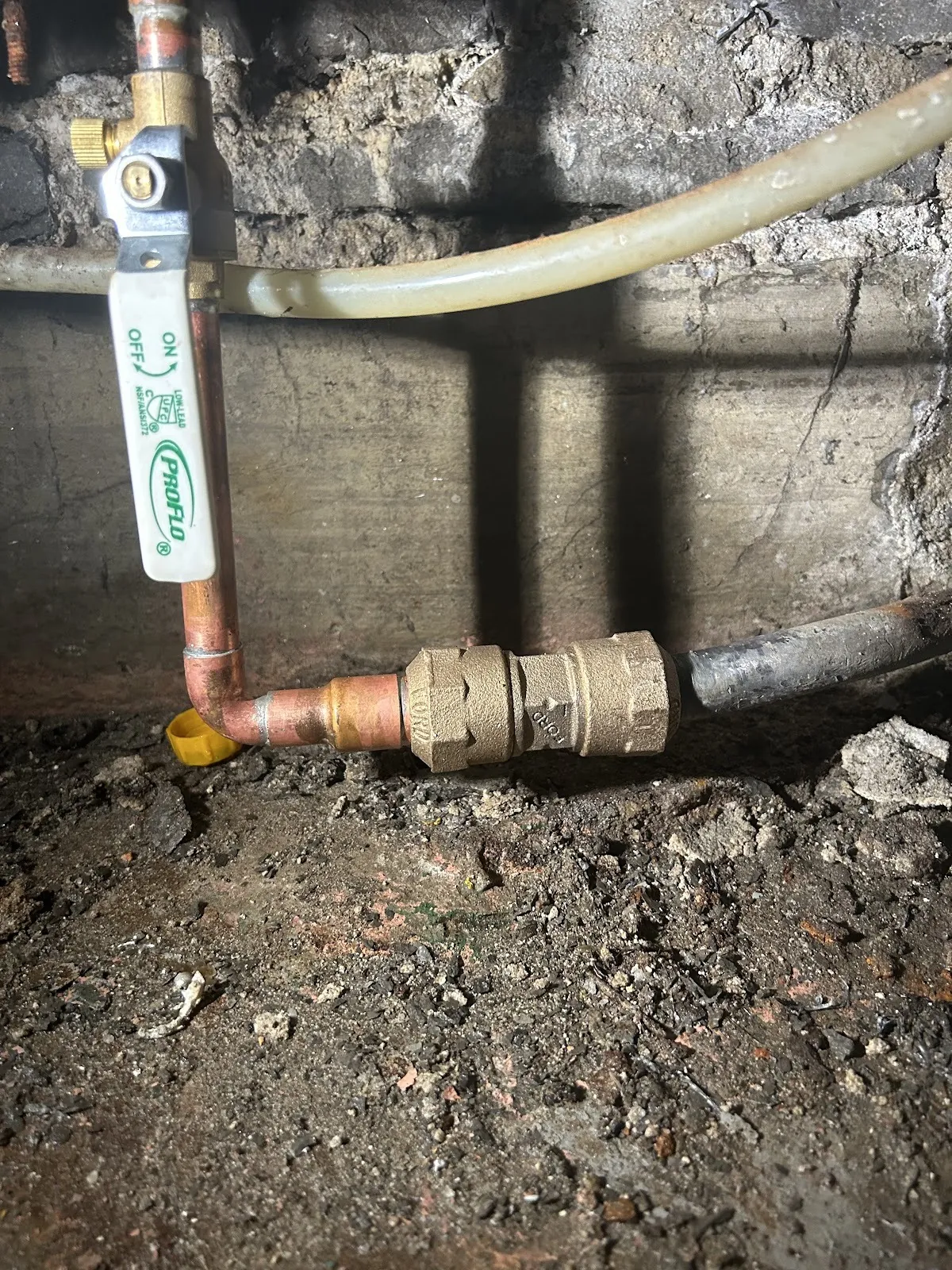
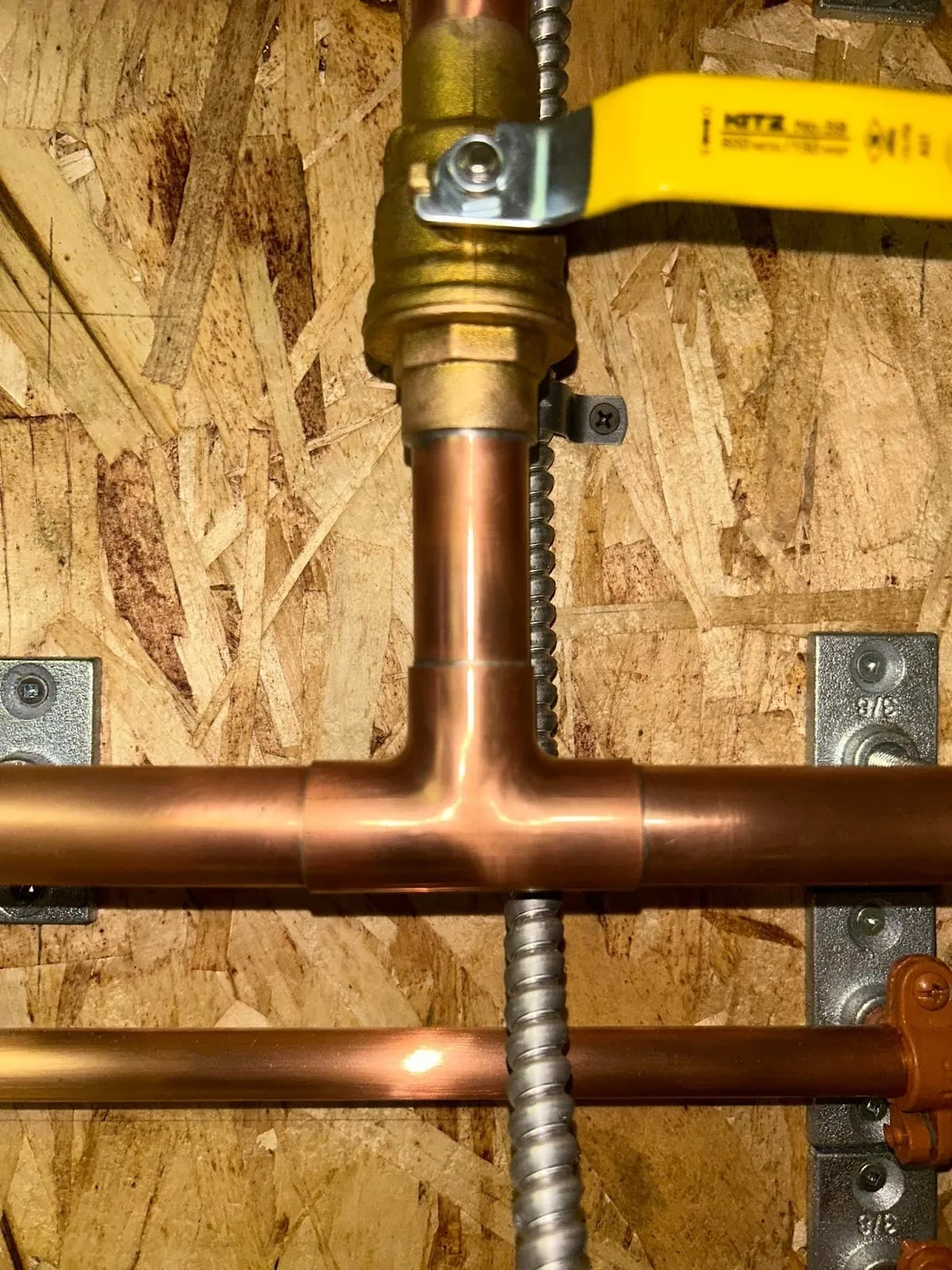
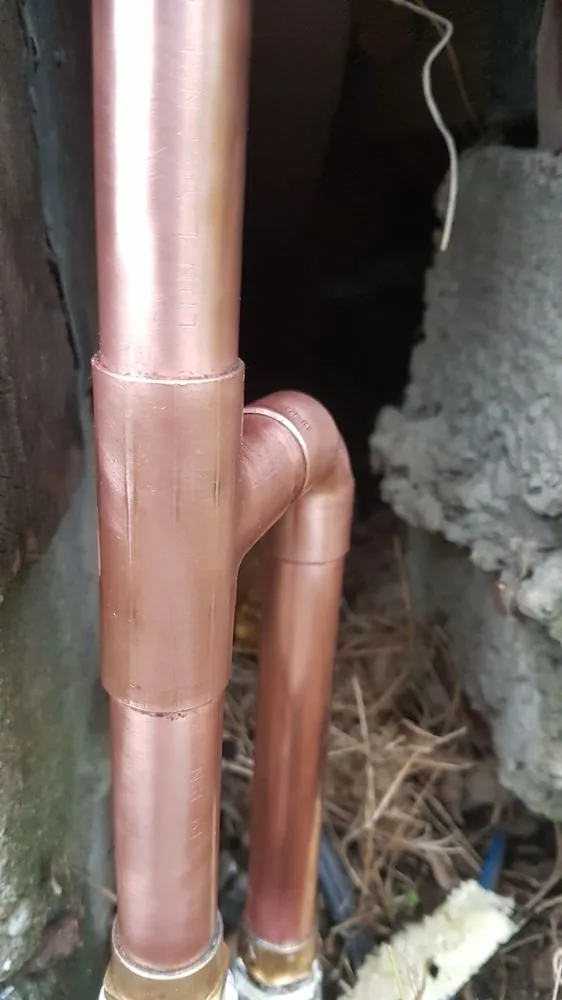
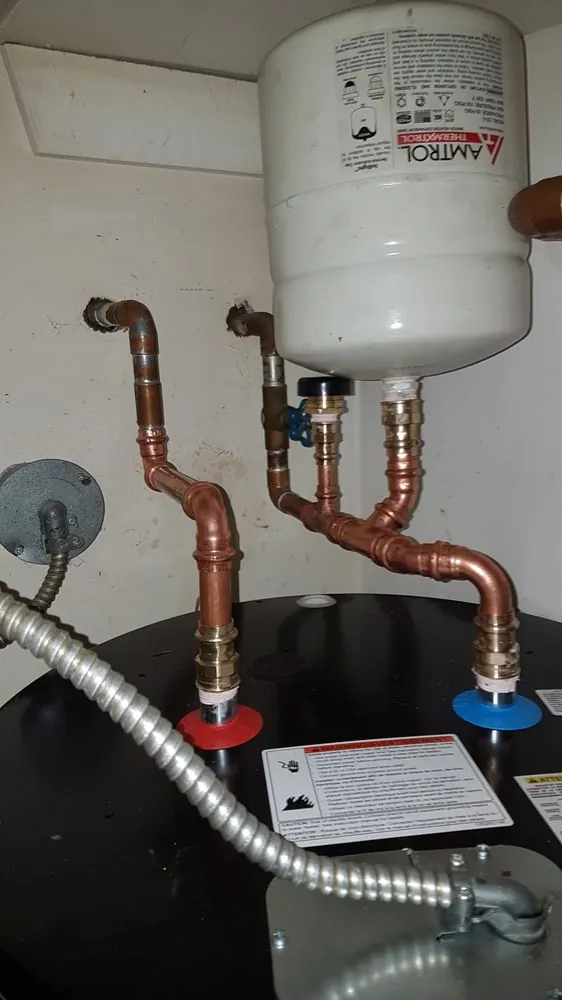
Copper is the most common supply pipe in older houses. It lasts a long time, but it can develop pinhole leaks, especially near fittings. Galvanized steel, still in some very old homes, corrodes from the inside, which shows up as low pressure and rusty water. Poly-B, the grey plastic pipe used in many Canadian homes built from the late 1970s to the mid-1990s, is known for failing at the fittings, and some insurers ask for it to be replaced. Not sure what you have? We'll tell you.
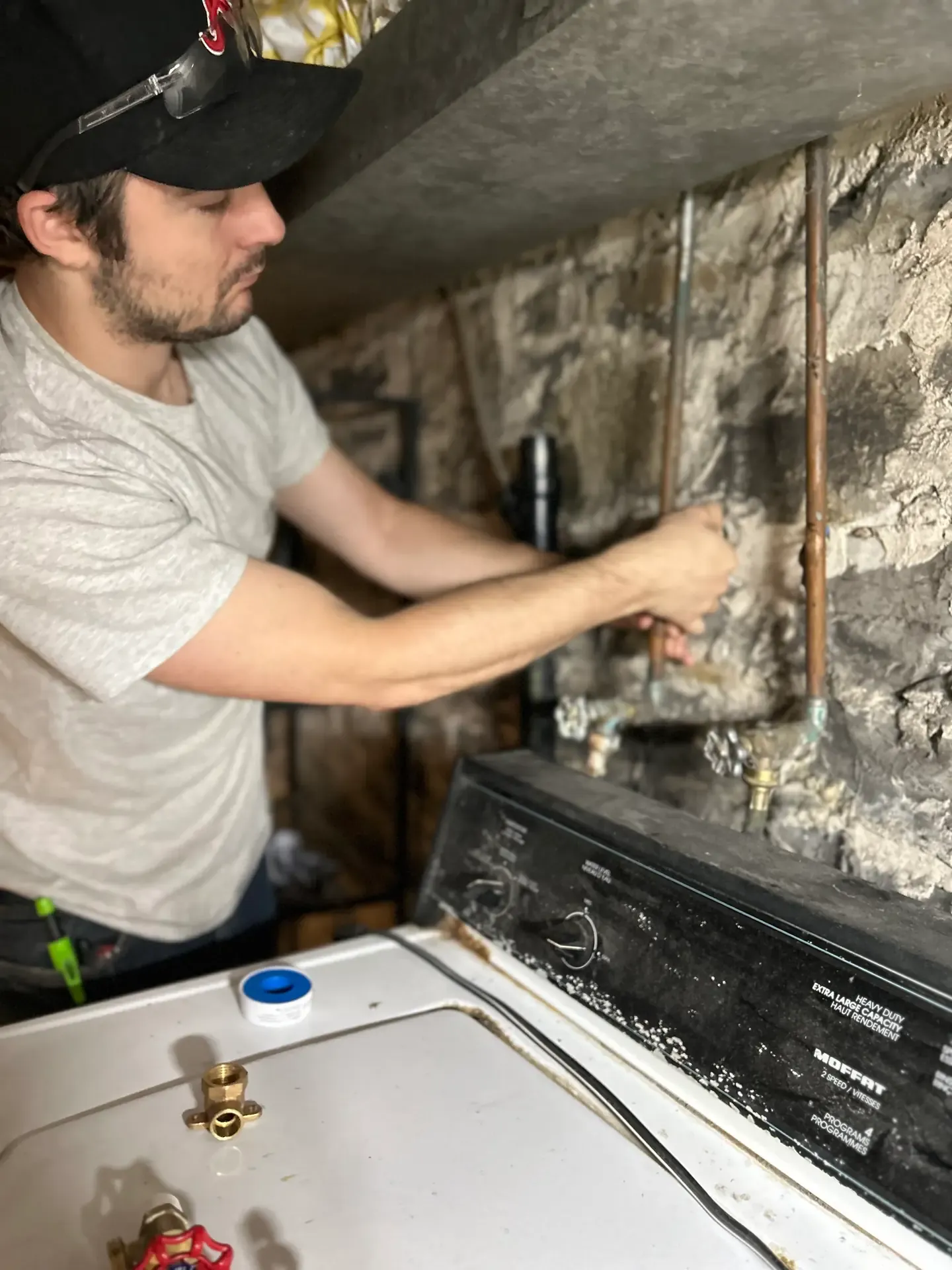
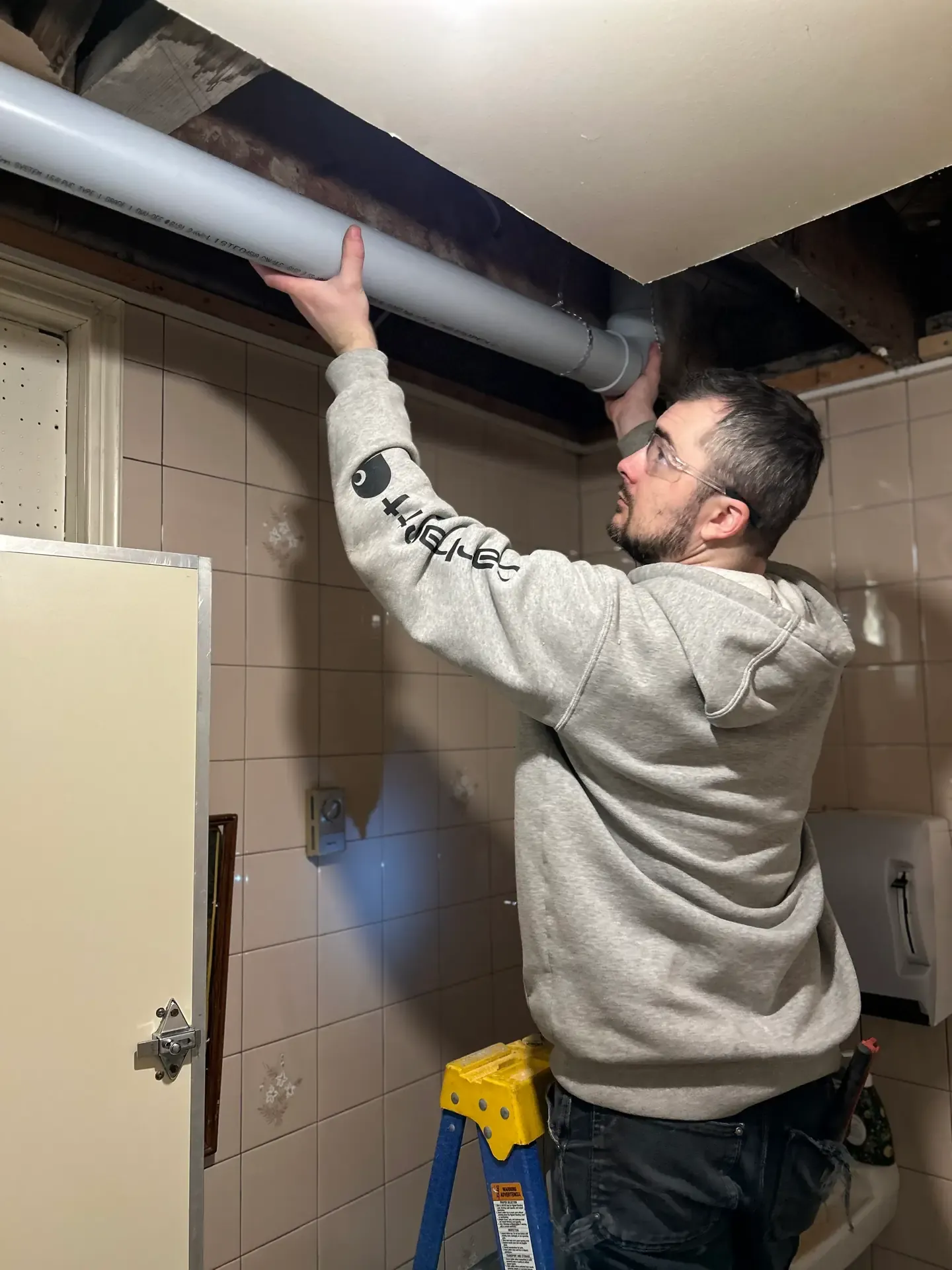
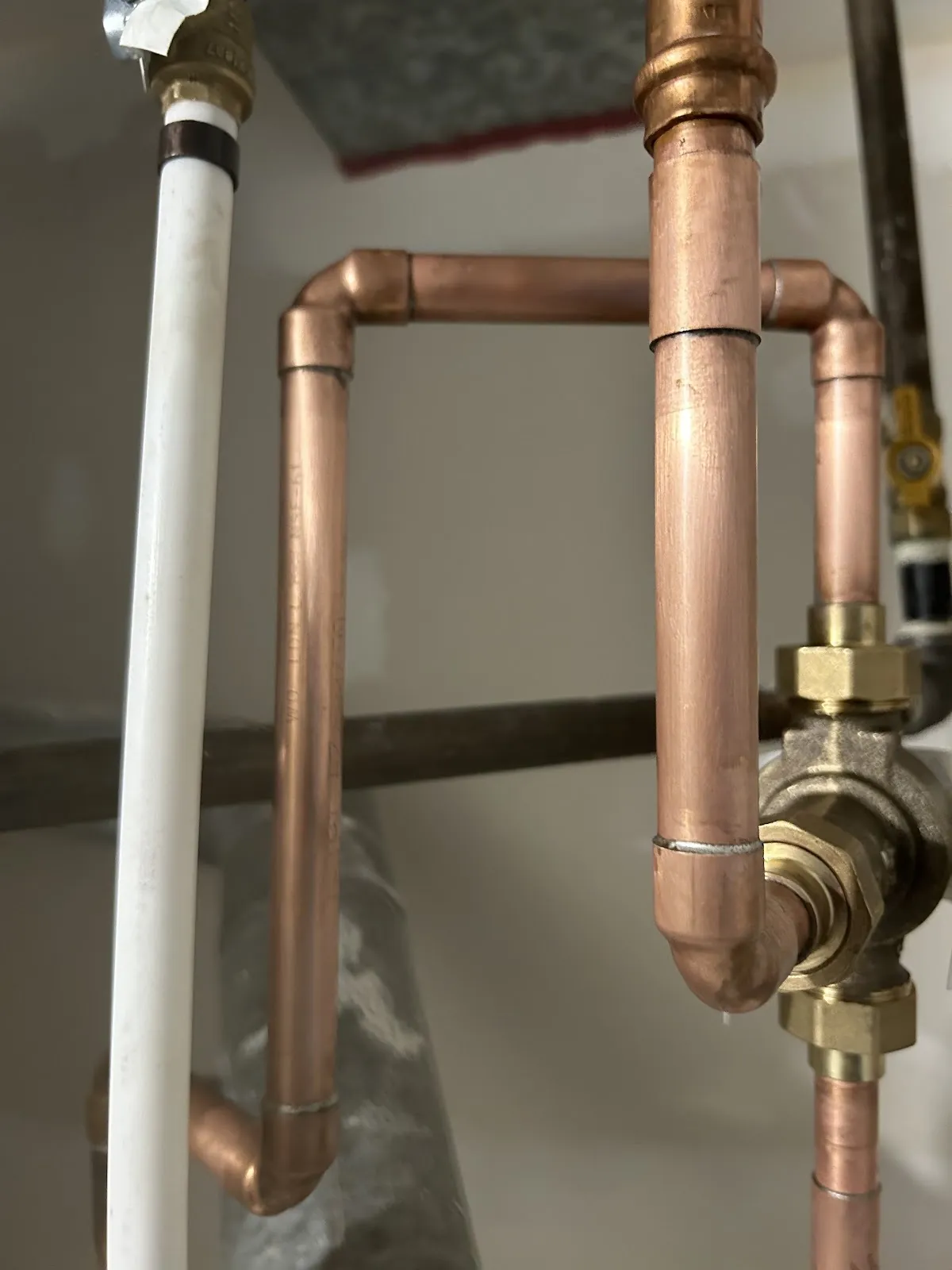
In stone-foundation homes, supply lines often run along the limestone basement wall. Getting at them takes care, and so does fastening new pipe to old stone properly. The first photo under Recent work below is one of those jobs.
Repair, replace or repipe?
A single leak in otherwise sound pipe gets a repair. When a line keeps failing, or it's galvanized or Poly-B, replacing that run makes more sense than patching it again. Whole-house repiping is a bigger job, and we quote it section by section so you can see where the money goes.
Pipe insulation
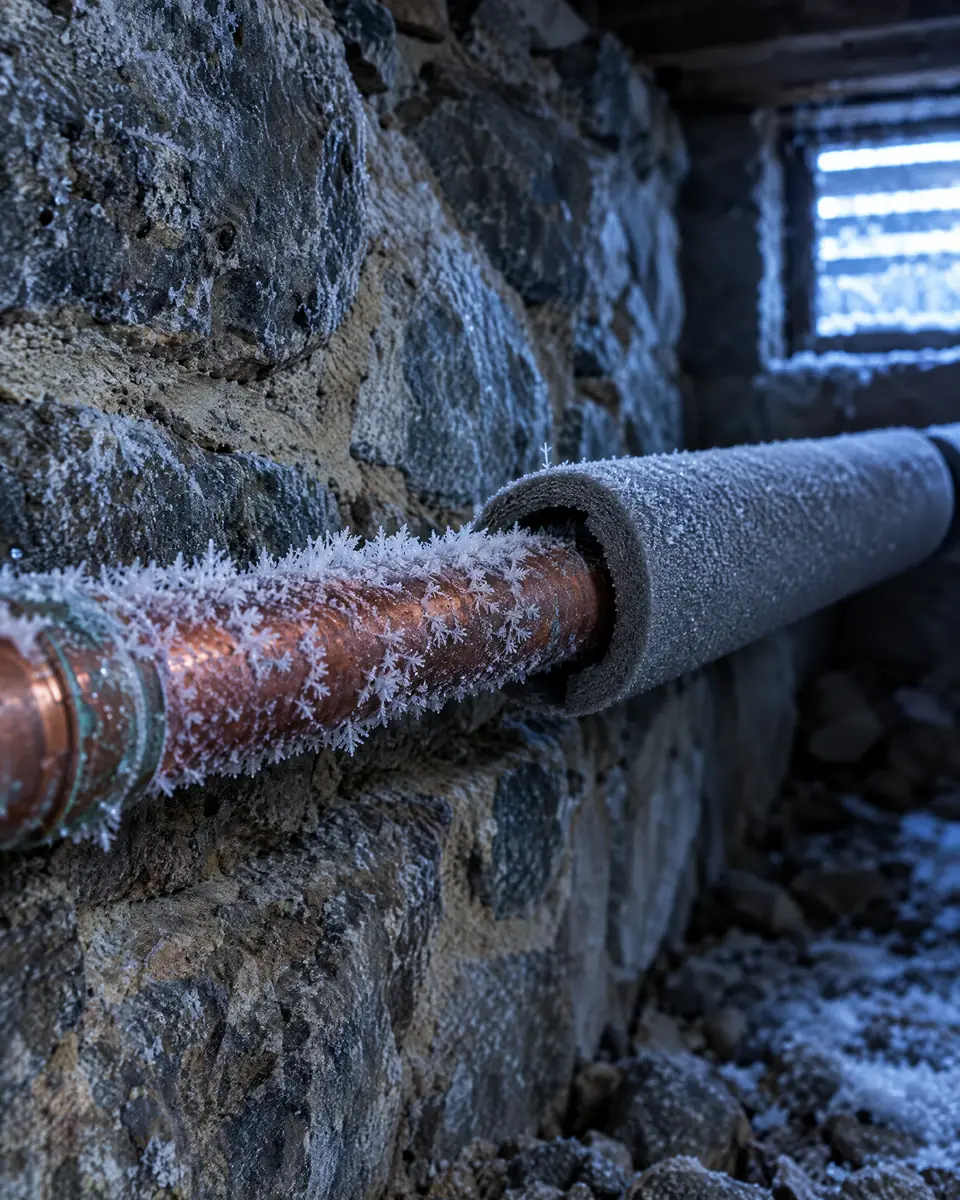
The pipes that freeze are the ones in outside walls, crawl spaces, garages and unheated additions. Insulating them costs far less than a burst pipe. Read our frozen pipes guide before winter.